LOW COST PROMOTIONAL LOLLY BAGS FOR YOUR BUSINESS - WITH OR WITHOUT YOUR BRANDING.

0

Your Cart is Empty

OUR PRODUCTS

19 June, 2026 5 min read

Chocolate 

The history of chocolate spans over 5,000 years, evolving from a sacred ceremonial drink in ancient civilizations to a global solid confection. 

Ancient Origins in the Americas

The story begins in South America, where the Mayo-Chinchipe culture in modern-day Ecuador first domesticated the cacao tree (Theobroma cacao) around 3300 BCE. Knowledge of cacao cultivation spread to Mesoamerica, where the Olmec civilization (c.  1900 BCE) became the first to process cacao beans into a beverage. 

Subsequent cultures, particularly the Maya and Aztec, revered chocolate as a gift from the gods. They consumed it as a bitter, frothy drink often flavored with chili peppers, vanilla, and corn, but never sugar. Cacao beans were so valuable they served as currency; Aztec records indicate one bean could buy a tamale, while 100 could purchase a turkey. 

Sacred Rituals and Currency in Mesoamerica

For the Maya and Aztec, chocolate (kakaw or xocolātl) was far more than a beverage; it was a sacred bridge to the divine and a cornerstone of the economy. 

  • Ritual Significance: The Maya viewed chocolate as a gift from the gods, essential for major life events. It was consumed during wedding ceremonies to bind unions and used in baptismal rites where ground cacao mixed with flowers anointed children.  Crucially, it accompanied the dead; archaeologists have found vessels with chocolate residue in royal tombs, intended to sustain souls in the underworld.
  • Economic Power: Cacao beans functioned as a robust currency.  Because the trees could not grow in the Aztec highlands, beans were imported and taxed, maintaining high value. Historical price lists indicate a turkey hen cost 100 beans, while a single avocado was worth just one.  The system was so entrenched that counterfeiters created fake beans filled with dirt or wax. Emperor Montezuma II reportedly stored nearly a billion beans in his royal vaults. 

Arrival and Transformation in Europe

Chocolate reached Europe in the early 16th century following the Spanish conquest of the Aztec Empire.  While initial reactions from Europeans were mixed due to the drink's bitterness, Spanish monks and nobility eventually embraced it, adding cane sugar, cinnamon, and vanilla to suit European palates. 

For nearly a century, Spain guarded the recipe as a state secret.  By the 17th century, chocolate spread to FranceItaly, and England, becoming a fashionable luxury among the aristocracy.  "Chocolate houses" emerged in major cities like London, serving as exclusive social hubs similar to coffee houses.

The Industrial Tipping Point

While the 19th century saw several innovations, the 1828 invention of the hydraulic press by Coenraad van Houten (and his father Casparus) was the definitive turning point that democratized chocolate. 

  • Separation and Efficiency: The press removed nearly half the natural fat (cocoa butter) from roasted beans, creating a dry "cake" that could be pulverized into fine cocoa powder.  This made chocolate drinks cheaper, smoother, and easier to produce.
  • Dual Utility: The process yielded two distinct products: low-fat powder for beverages and pure cocoa butter.  This excess cocoa butter was the key ingredient Joseph Fry later used in 1847 to create the first solid chocolate bar by remixing it with sugar and cocoa powder. 
  • Mass Market Shift: Before these innovations, chocolate was a gritty, expensive luxury for the elite. Van Houten’s technology, later refined by the "Dutching" process (treating cocoa with alkaline salts to reduce bitterness), lowered costs and improved flavor, transforming chocolate into an affordable everyday treat for the working class.

The Industrial Revolution: From Drink to Bar

For most of its history, chocolate was consumed exclusively as a liquid. The transition to solid chocolate occurred during the Industrial Revolution through key technological innovations:

  • 1828 (The Cocoa Press): Dutch chemist Coenraad van Houten invented a hydraulic press that separated cocoa butter from roasted cacao beans. This created a fine cocoa powder and made chocolate production more consistent and affordable. 
  • 1847 (The First Chocolate Bar): British chocolatier Joseph Fry discovered that adding melted cocoa butter back into cocoa powder and sugar created a moldable paste. This led to the creation of the first solid chocolate bar. 
  • 1875 (Milk Chocolate): Swiss chocolatier Daniel Peter, collaborating with Henri Nestlé, successfully combined cocoa with powdered milk to invent milk chocolate. 
  • 1879 (Conching): Rodolphe Lindt developed the conching machine, which refined the chocolate mixture to create the smooth, velvety texture characteristic of modern chocolate.

Global Expansion and Corporate Consolidation (1880–1945)

Following the industrial breakthroughs of the late 19th century, chocolate production shifted geographically and scaled massively. By 1880, cultivation expanded from South America and the Caribbean to West Africa (particularly European colonies like the Gold Coast, now Ghana, and Ivory Coast).  This surge in supply caused cocoa prices to drop, transforming chocolate from a luxury into an affordable commodity for the working class. 

The industry boomed with the rise of iconic brands and conglomerates:

  • United States: Milton Hershey introduced his milk chocolate bar in 1900 and built a factory town in Pennsylvania by 1903.  Frank Mars founded his company in 1911, launching the Milky Way (1923) and Snickers (1930). 
  • Europe: Cadbury merged with Fry's in 1919, while Swiss giants like Nestlé absorbed competitors like Peter, Cailler, and Kohler by 1929
  • Product Explosion: By the 1920s, over 40,000 different candy bars were being manufactured in the U.S. alone.

Chocolate as a Wartime Necessity:

War image

During both World Wars, chocolate transitioned from a treat to a strategic military resource. Governments recognized its high caloric density and morale-boosting properties. 

  • World War I: Chocolate was included in field rations for quick energy. 
  • World War II: The U.S. government partnered with Hershey to produce the "D Ration" bar.  Designed to be heat-resistant and "not too tasty" (to prevent soldiers from eating it as a snack rather than an emergency survival food), over 3 billion units were produced.  Hershey also created the "Tropical Bar" for Pacific campaigns, which resisted melting in high humidity.  This massive production effort saved the U.S. chocolate industry from being shut down as "non-essential" during the war. 

Innovation in Varieties: White and Ruby

While dark and milk chocolate dominated for a century, the 20th and 21st centuries saw the official recognition of new categories:

  • White Chocolate: Although experimented with earlier, Nestlé officially launched the first white chocolate bar, the Galak (or Milkybar), in 1936.  It consists of cocoa butter, sugar, and milk solids, but no cocoa solids.

Ruby Chocolate: In 2017, Swiss-Spanish manufacturer Barry Callebaut unveiled Ruby chocolate as the "fourth type" of chocolate.  Derived from specific ruby cocoa beans processed to enhance natural pink pigments and berry-like flavors, it contains no added color or fruit flavoring. 

The Ethical Turn: Fair Trade and Sustainability

From the 1980s onward, the focus of chocolate history shifted toward ethical sourcing and labor rights, addressing issues of child labor and deforestation in West Africa. 

  • Certification Beginnings: The Max Havelaar label launched in the Netherlands in 1988, initially for coffee.  The first Fairtrade-certified chocolate barMaya Gold by Green & Black's, appeared in 1994
  • Global Standards: In 1997, multiple initiatives merged to form Fairtrade International (FLO), standardizing premiums paid to farmers. 
  • Modern Challenges: Today, major corporations like Cadbury (via its Cocoa Life program) and Nestlé have launched proprietary sustainability schemes, though independent Fairtrade certification remains a critical benchmark for ethical consumption.

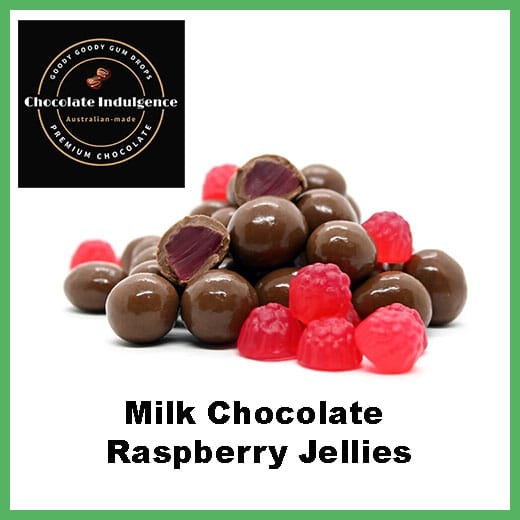
Now in 2026 the world can enjoy chocolate in many forms. Goody Goody Gum Drops - Chocolate Indulgence range of premium quality chocolate made by some of Australia's best chocolate makers is available to everyone in Australia, New Zealand, Hong Kong, UK, Canada & Ireland.

 Chocolate Coffee Beans

 Chocolate Macadamia Nuts

 Chocolate Raspberries

 Vegan Dark Chocolate

Leave a comment

Comments will be approved before showing up.